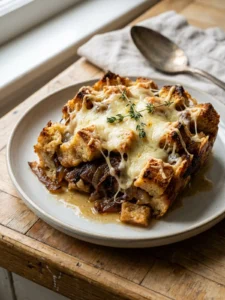
This French onion stuffing captures all the savory, comforting flavors of the classic soup in a baked side dish. It features deeply caramelized onions, a rich beef broth, and crusty bread, all held together with eggs and a generous amount of nutty Gruyère cheese.

Jump to:
While caramelizing the onions takes some time, the process is straightforward and mostly hands-off. The result is a deeply flavorful stuffing that’s a welcome addition to a holiday table or a special Sunday dinner.
Why You'll Love This Recipe
- Slowly caramelizing the onions builds a deep, sweet, and savory flavor base that is the signature of this dish
- Tempering the eggs with a little of the hot broth prevents them from scrambling, ensuring a smooth, custard-like binder for the stuffing
- Baking and then broiling creates two distinct textures: a soft, savory interior and a crispy, cheesy crust on top
Essential Ingredients
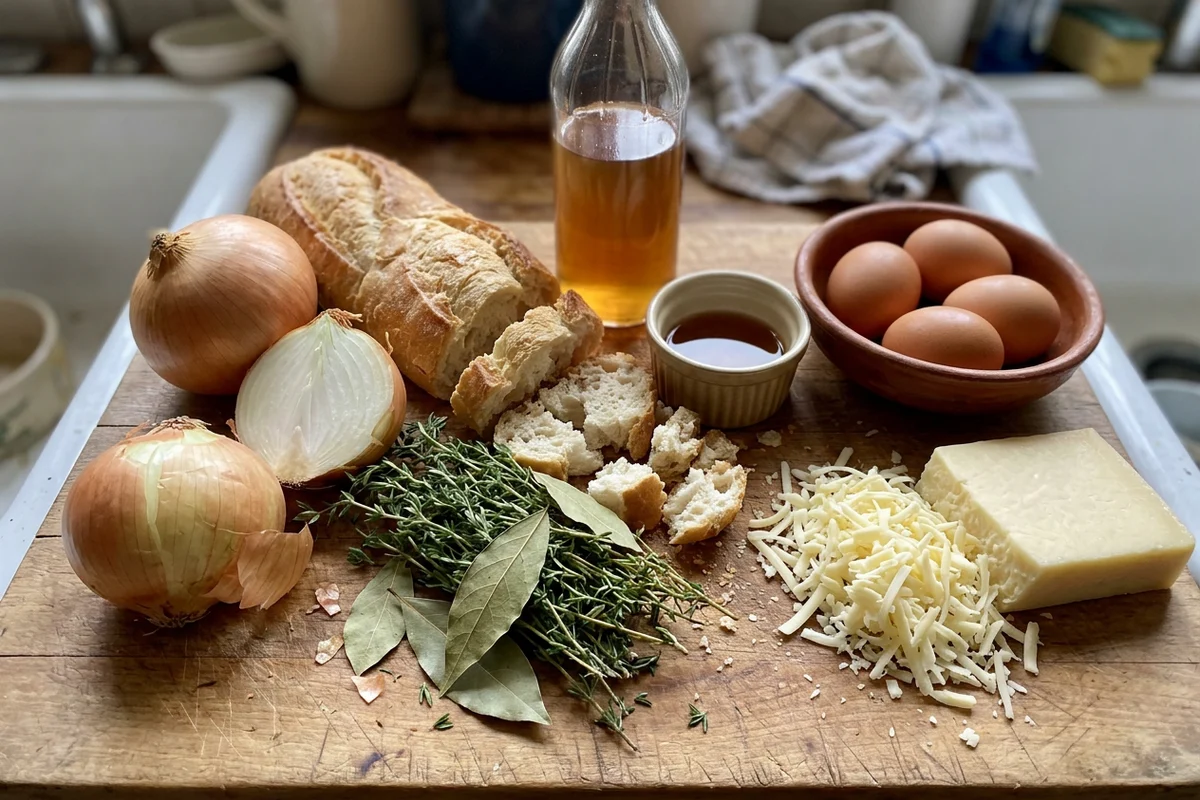
- Yellow Onions: These have a balanced flavor that becomes sweet when caramelized. Sweet onions like Vidalia also work well.
- Dry Sherry: Adds a distinct nutty aroma and depth. If you prefer not to use alcohol, you can substitute it with an equal amount of beef stock.
- French Bread: Use a sturdy, crusty loaf that is a day or two old. Stale bread absorbs the liquid better without becoming mushy.
- Gruyère Cheese: This Swiss cheese is traditional for French onion soup and melts beautifully. Comté, Swiss, or even a mix of provolone and Parmesan are good substitutes.
The full ingredients list, including measurements, is provided in the recipe card directly below.
Let’s Make it together
Caramelize the Onions: Start by melting the butter and oil in a large Dutch oven. Add the sliced onions, thyme, bay leaves, and seasonings. Cook over medium-low heat, stirring occasionally, for about 50 minutes until the onions are soft, sweet, and deeply golden brown. This slow cooking is key to developing flavor.
Make the Broth: Once the onions are caramelized, add the minced garlic and cook for another minute. Pour in the sherry to deglaze the pot, scraping up any browned bits from the bottom. Stir in the beef stock, bring to a simmer, and cook for 10 minutes to let the flavors meld.
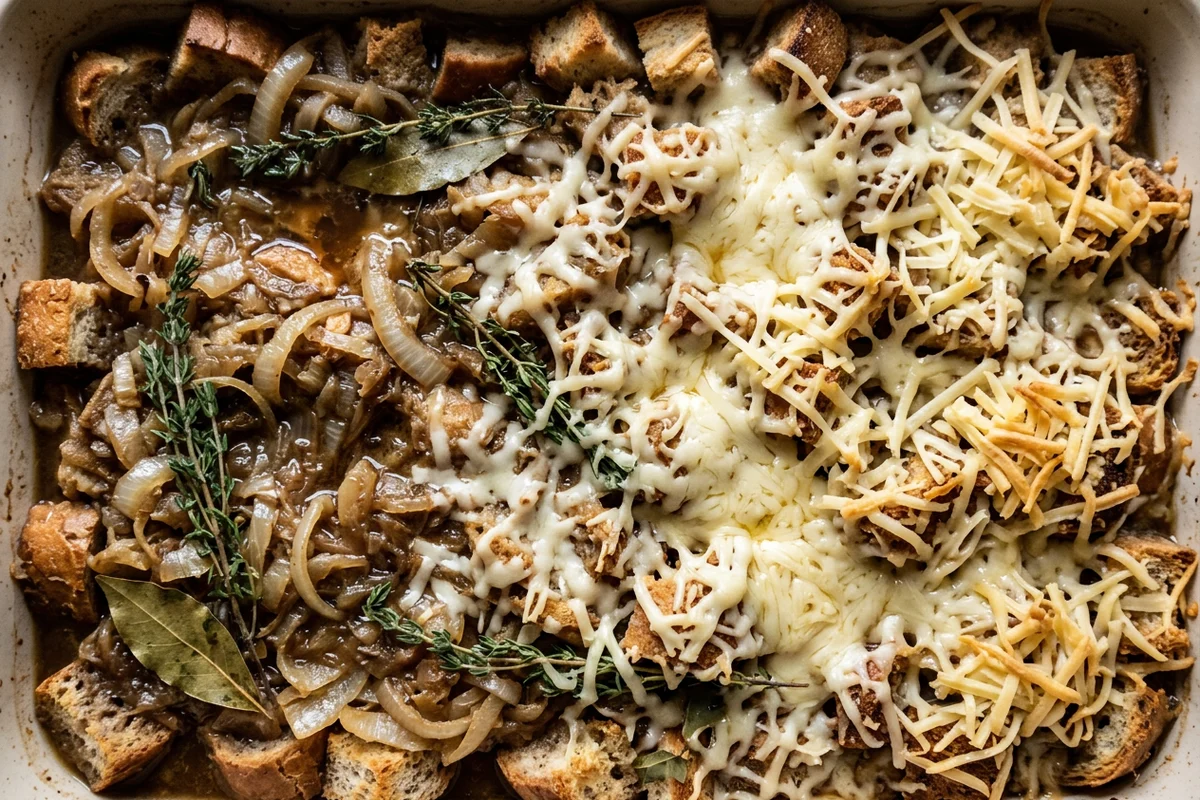
Assemble the Stuffing: In a large bowl, whisk the eggs. Slowly stream in about two cups of the hot onion broth while whisking constantly to temper the eggs. Add the torn bread and about one-third of the shredded Gruyère, tossing gently to combine everything.
Bake and Broil: Transfer the mixture to a greased baking dish and pour the remaining onion broth evenly over the top. Bake at 350°F for about 35 minutes. Finally, top with the rest of the Gruyère and broil for a minute or two until the cheese is melted, bubbly, and golden.
You Must Know
- For the best flavor, allow the onions to caramelize slowly over low heat
- Rushing this step will prevent them from developing their characteristic sweetness
- Using day-old or stale bread is important
- It absorbs the broth without becoming soggy
- If your bread is fresh, tear it into pieces and bake at 300°F (150°C) for 15-20 minutes to dry it out
- For safety, the center of the stuffing should reach an internal temperature of 165°F (74°C) due to the eggs
- If you don’t have Gruyère, other good melting cheeses like Comté, Swiss, or fontina can be used
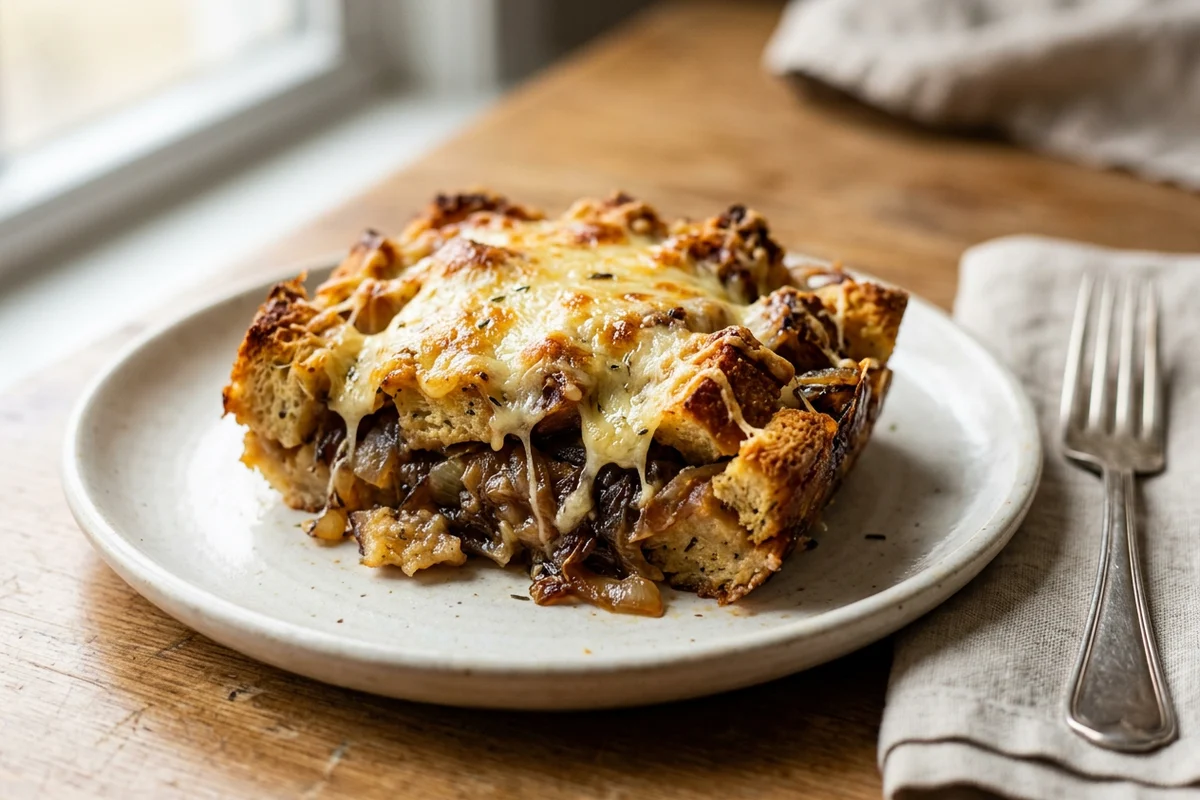
Serving Ideas
This rich stuffing is a great side for roasted chicken, turkey, or a simple beef roast.
Storing & Reheating
Store leftover stuffing in an airtight container in the refrigerator for up to 3 days. Reheat in a 350°F (175°C) oven until warmed through, covering with foil to prevent the top from browning further. For longer storage, you can freeze it for up to 2 months. Thaw in the refrigerator overnight before reheating.
FAQ
Can I make this ahead of time?
Yes. You can assemble the stuffing in the baking dish (without baking) up to one day ahead. Cover and refrigerate. You may need to add 10-15 minutes to the baking time when you bake it from cold.
Do I have to use stale bread?
Stale bread works best because it’s drier and soaks up the broth without falling apart. If your bread is fresh, you can tear it into pieces and toast it in a low oven (300°F/150°C) for 15-20 minutes to dry it out first.
My onions are taking forever to caramelize. Am I doing something wrong?
Patience is the most important part of caramelizing onions. Keep the heat on medium-low and resist the urge to turn it up, which can cause them to burn instead of sweeten. It can take up to an hour, but the flavor is worth the wait.
Did You Enjoy Making This Recipe? Please rate this recipe with ⭐⭐⭐⭐⭐ or leave a comment.
📖 Recipe Card
Print
French Onion Stuffing
- Total Time: 120 minutes
- Yield: One 9x13-inch baking dish 1x
Description
Rich caramelized onions and beef broth soak into crusty bread, all baked under a thick layer of melted Gruyère cheese.
Ingredients
- 1/4 cup (57 g) unsalted butter
- 2 tbsp (30 ml) olive oil
- 4 pounds (about 1.8 kg) yellow onions, thinly sliced
- 4–5 fresh thyme sprigs
- 2 bay leaves
- 1 tsp kosher salt
- 1/2 tsp freshly ground black pepper
- 4 cloves garlic, minced
- 1/4 cup (60 ml) dry sherry
- 2 1/2 cups (600 ml) beef stock
- 1 loaf (about 20 oz / 570 g) stale French bread, torn into 1-inch pieces
- 2 large eggs
- 12 ounces (340 g) Gruyère cheese, shredded, divided
Instructions
- In a large Dutch oven or heavy-bottomed pot, melt the butter with the olive oil over medium-high heat. Add the onions, thyme sprigs, bay leaves, salt, and pepper. Cook for 10 minutes, stirring frequently, until the onions begin to soften.
- Reduce the heat to medium-low. Continue to cook, stirring occasionally, for 40-50 minutes, until the onions are deeply golden brown and caramelized. Add the minced garlic and cook for 1 minute more until fragrant.
- Pour the sherry into the pot and stir, scraping up any browned bits from the bottom. Let it simmer for 1-2 minutes. Add the beef stock, bring the mixture to a simmer, and cook for 10 minutes. Turn off the heat and remove the thyme sprigs and bay leaves.
- Preheat your oven to 350°F (175°C). Lightly grease a 9×13-inch baking dish.
- In a large bowl, beat the eggs. While whisking continuously, slowly pour about 2 cups of the hot onion broth mixture into the eggs to temper them. This prevents the eggs from scrambling.
- Add the torn bread and 4 ounces (about 1/3) of the shredded Gruyère cheese to the bowl with the egg mixture. Toss gently until the bread is evenly coated.
- Transfer the bread mixture to the prepared baking dish and spread it into an even layer. Pour the remaining onion and broth mixture over the top.
- Bake, uncovered, for 35 minutes, or until the top is golden and the stuffing is set. The center of the stuffing should register 165°F (74°C) on an instant-read thermometer.
- Set the oven to broil. Sprinkle the remaining 8 ounces of Gruyère cheese over the stuffing. Broil for 1-2 minutes, watching closely, until the cheese is melted, bubbly, and lightly browned. Let it rest for a few minutes before serving.
Notes
- For the best flavor, allow the onions to caramelize slowly over low heat. Rushing this step will prevent them from developing their characteristic sweetness.
- Using day-old or stale bread is important. It absorbs the broth without becoming soggy. If your bread is fresh, tear it into pieces and bake at 300°F (150°C) for 15-20 minutes to dry it out.
- For safety, the center of the stuffing should reach an internal temperature of 165°F (74°C) due to the eggs.
- If you don’t have Gruyère, other good melting cheeses like Comté, Swiss, or fontina can be used.
- Prep Time: 20 minutes
- Cook Time: 100 minutes
- Category: Side Dish
- Method: Baking
- Cuisine: American